
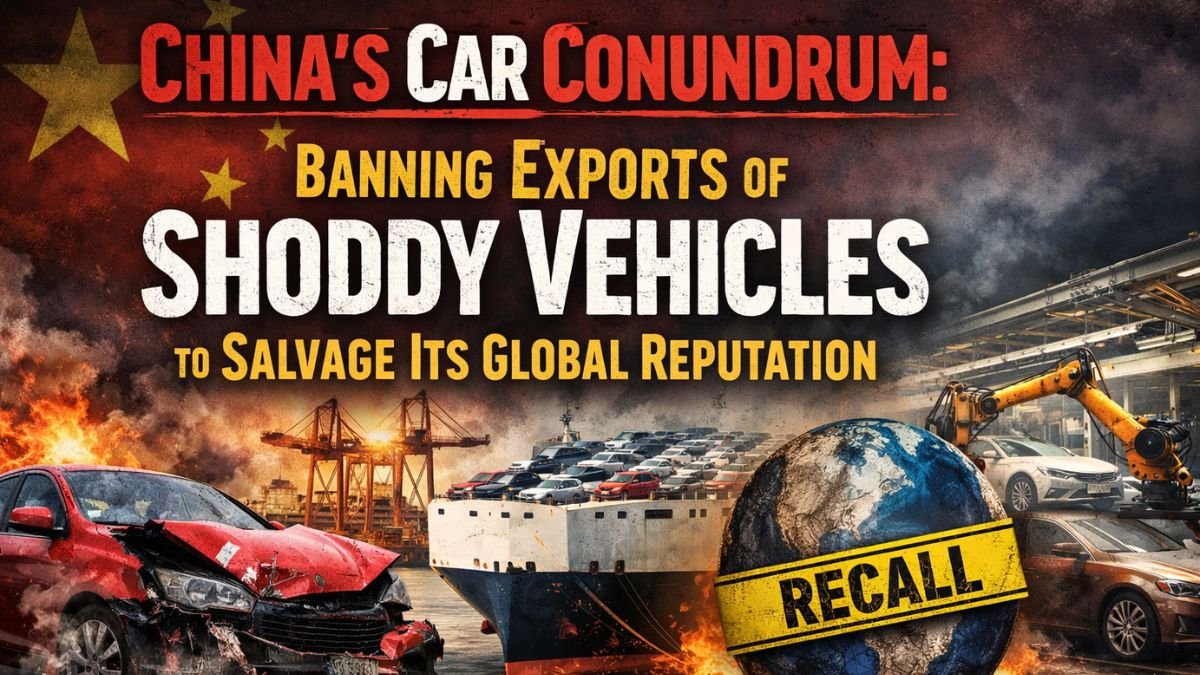
China’s automobile industry has experienced extraordinary growth over the past two decades, transforming the country into one of the world’s largest car manufacturers and exporters. From affordable compact vehicles to cutting-edge electric cars, Chinese automakers have rapidly expanded their footprint across global markets. However, this rapid expansion has not come without challenges. Concerns over inconsistent quality, safety standards, and durability have raised questions among international consumers. Now, China faces a critical turning point as it seeks to protect its global image by addressing the issue of substandard vehicle exports.
駅から歩いて5分の場所にあるレトロな喫茶店で落ち着いた朝ごはんを
The Rise of “Shoddy Exports” Concerns
As Chinese vehicles began entering markets in Asia, Africa, and parts of Europe, reports of poorly built cars started to emerge. These vehicles often suffered from mechanical issues, lower-quality materials, and inadequate safety features compared to international standards. While many Chinese brands have made significant improvements, the presence of unreliable exports has cast a shadow over the entire industry. This has created a perception problem, where even high-quality models struggle to gain trust due to the reputation of a few underperforming products.
Government Intervention and New Regulations
Recognizing the long-term risks to its automotive ambitions, the Chinese government has stepped in with stricter regulations aimed at curbing the export of low-quality vehicles. Authorities are reportedly implementing tighter inspection protocols, quality benchmarks, and certification processes before cars can be shipped overseas. This move is not just about protecting consumers abroad, but also about ensuring that Chinese manufacturers maintain a consistent standard that aligns with global expectations.
By banning the export of substandard vehicles, China is signaling a clear message: it wants to compete on quality, not just price. This shift marks a significant evolution in the country’s industrial strategy, emphasizing sustainability, innovation, and reliability over rapid expansion.
Impact on Global Markets
The decision to restrict exports of poorly made vehicles could have far-reaching consequences for global automotive markets. For one, it may reduce the availability of ultra-low-cost vehicles in developing regions, where Chinese cars have often filled a critical affordability gap. While this could lead to higher prices in the short term, it may also encourage consumers to invest in more reliable and safer options.
At the same time, the move could boost confidence in Chinese brands among international buyers. As quality improves and regulatory oversight strengthens, consumers may begin to view Chinese cars as credible alternatives to established global brands. This could open new opportunities in competitive markets such as Europe and North America, where quality and safety are paramount.
Challenges for Chinese Automakers
While the government’s intervention is a step in the right direction, it also presents challenges for domestic manufacturers. Smaller companies that previously relied on exporting low-cost, lower-quality vehicles may struggle to meet the new standards. This could lead to consolidation within the industry, as only those capable of maintaining high quality will survive in the export market.
Moreover, improving quality often comes with increased production costs. Manufacturers will need to invest in better materials, advanced technology, and rigorous testing processes. Balancing these costs while remaining competitive on pricing will be a key challenge moving forward. However, for many companies, this shift could ultimately lead to stronger brand value and long-term profitability.
A Shift Toward Innovation and Electric Vehicles
China’s push for higher standards comes at a time when it is already leading the global transition toward electric vehicles. Many Chinese automakers are investing heavily in EV technology, battery innovation, and smart vehicle systems. By focusing on quality as well as innovation, China has the potential to redefine its role in the global automotive industry.
If successful, this strategy could position Chinese brands as leaders not only in affordability but also in technology and reliability. This would mark a significant transformation from being seen as producers of budget vehicles to becoming pioneers in the future of mobility.
Rebuilding Trust on the Global Stage
Trust is a crucial factor in the automotive industry, where safety and reliability are non-negotiable. China’s decision to ban the export of shoddy vehicles is a proactive step toward rebuilding that trust. By ensuring that only high-quality cars reach international markets, the country aims to reshape perceptions and establish itself as a dependable player in the global arena.
Over time, consistent quality improvements could help erase past doubts and strengthen the reputation of Chinese automakers. This, in turn, would benefit not just individual companies but the entire industry as a whole.
Conclusion
China’s move to ban the export of substandard vehicles represents a pivotal moment for its automotive sector. While the decision may pose short-term challenges, it holds the promise of long-term gains in credibility, competitiveness, and consumer trust. By prioritizing quality over quantity, China is taking a decisive step toward securing its place as a global automotive leader. If executed effectively, this strategy could transform the narrative around Chinese cars, turning a reputation challenge into an opportunity for growth and innovation.
FAQs
Q1. Why is China banning low-quality car exports?
To protect its global reputation and ensure higher quality standards in international markets.
Q2. What are “shoddy vehicles”?
Vehicles that fail to meet safety, durability, or performance standards.
Q3. How will this impact global buyers?
Buyers may receive better-quality vehicles with improved reliability and safety.
