

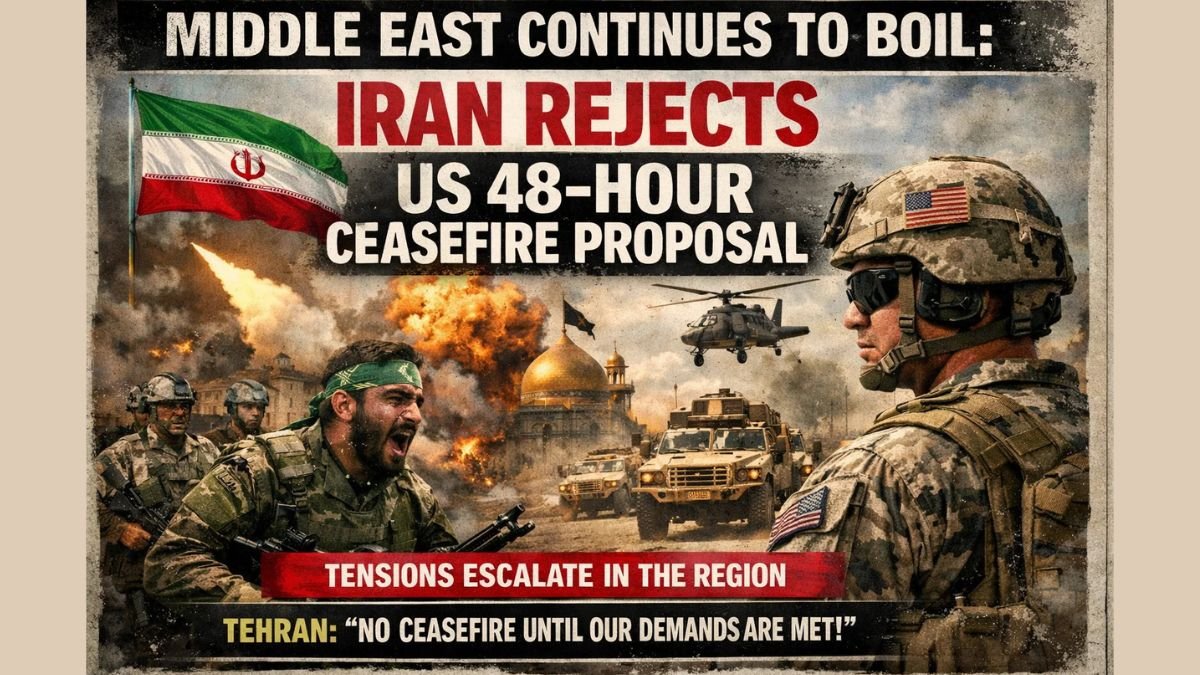
The Middle East once again finds itself at the center of global चिंता, as rising military tensions and failing diplomatic efforts push the region closer to prolonged instability. The latest development—Iran’s rejection of a proposed 48-hour ceasefire by the United States—has intensified fears that the conflict may spiral further out of control rather than move toward resolution.
This rejection is not just a routine diplomatic setback. It represents a deeper breakdown in trust, communication, and willingness to compromise between two long-standing adversaries. With ongoing strikes, military escalations, and mounting casualties, the situation has evolved into a complex geopolitical crisis that extends far beyond regional borders.
The Ceasefire Proposal: A Short Window for Peace
According to multiple reports, the United States had proposed a temporary 48-hour ceasefire as a means to pause hostilities and open a pathway for broader negotiations. The offer was reportedly conveyed through an unnamed intermediary country, highlighting the absence of direct communication channels between Washington and Tehran.
The intention behind such a short-term ceasefire was likely strategic. A 48-hour pause could have allowed both sides to reassess their positions, provide humanitarian relief, and potentially build momentum toward a longer-term truce. In conflict zones, even brief cessations of violence can save lives and create opportunities for dialogue.
However, the proposal never gained traction in Tehran. Iranian authorities, citing unnamed sources in local media, rejected the offer outright, signaling that they were not prepared to halt military operations under the current conditions.
Why Iran Said No
Iran’s rejection of the ceasefire reflects a broader strategic calculation rather than a simple refusal of peace. Reports suggest that Tehran views the proposal as insufficient and possibly even disadvantageous in the current military context.
One key factor appears to be timing. The ceasefire offer came amid escalating hostilities, including recent strikes and counter-strikes between the two sides. Iranian officials may perceive that halting operations now would reduce their strategic advantage or provide the United States with an opportunity to regroup militarily.
Additionally, there is a strong element of mistrust. Decades of geopolitical rivalry have created a situation where even humanitarian or temporary proposals are viewed with suspicion. For Iran, accepting a ceasefire without concrete guarantees or broader concessions may seem like a tactical risk rather than a diplomatic opportunity.
Reports also indicate that Iran’s response was not formally documented but instead demonstrated through continued military action on the ground. This symbolic rejection underscores the seriousness of Tehran’s stance.
Escalation on the Battlefield
The rejection of the ceasefire coincides with a sharp escalation in military activities across the region. The conflict has already entered several months of sustained warfare, with no clear signs of de-escalation.
Recent developments include the downing of U.S. military aircraft and intensified missile exchanges, indicating that both sides are willing to continue aggressive operations. These incidents are not isolated; they are part of a broader pattern of increasing confrontation that is drawing in multiple regional actors.
The involvement of other countries and non-state actors further complicates the situation. As alliances shift and new fronts emerge, the conflict risks expanding into a wider regional war, potentially affecting global security and economic stability.
The Role of Intermediaries and Failed Mediation
The fact that the ceasefire proposal had to be delivered through an intermediary highlights a significant diplomatic challenge: the lack of direct dialogue between Iran and the United States.
Countries in the region and beyond have attempted to mediate, but these efforts have largely failed to produce meaningful results. The inability to establish a reliable communication channel makes it difficult to negotiate even temporary measures, let alone a comprehensive peace agreement.
This reliance on intermediaries also introduces uncertainty. Messages can be misinterpreted, delayed, or altered, reducing the effectiveness of diplomatic initiatives. In high-stakes situations like this, even minor misunderstandings can have major consequences.
Global Implications of the Crisis
The ongoing tensions are not confined to the Middle East. They have significant implications for the global economy, particularly in the energy sector. Key shipping routes and النفط supply chains are under threat, leading to rising fuel prices and economic instability in various parts of the world.
Countries that depend heavily on oil imports are already feeling the impact. Inflationary pressures, supply disruptions, and market volatility are becoming increasingly common as the conflict intensifies.
Moreover, the geopolitical implications are profound. Major powers are closely monitoring the situation, and any further escalation could trigger broader international involvement. This raises concerns about a potential global confrontation, especially if diplomatic solutions continue to fail.
Humanitarian Concerns Amid Rising Violence
Beyond the political and economic dimensions, the human cost of the conflict is deeply concerning. Civilian populations are bearing the brunt of the violence, with casualties, displacement, and infrastructure damage becoming more widespread.
A temporary ceasefire, even for 48 hours, could have provided critical relief to affected communities. It might have allowed humanitarian organizations to deliver aid, evacuate civilians, and assess the damage on the ground.
The rejection of the ceasefire means that such relief efforts will remain limited, at least for now. This underscores the urgent need for a more sustainable solution that prioritizes human lives alongside strategic interests.
The Road Ahead: Uncertainty and Risk
As the situation stands, the prospects for immediate de-escalation appear uncertain. The rejection of the ceasefire indicates that both sides are prepared to continue their current course, despite the risks involved.
Future diplomatic efforts may focus on more comprehensive proposals that address the core concerns of both parties. However, achieving such an agreement will require significant राजनीतिक will, trust-building measures, and possibly international pressure.
In the absence of progress, the conflict is likely to persist, with potentially devastating consequences for the region and beyond.
Conclusion: A Critical Moment for Diplomacy
The rejection of the 48-hour ceasefire proposal is more than just a missed opportunity—it is a reflection of the গভीर divide between Iran and the United States. It highlights the challenges of achieving peace in a region marked by historical tensions, strategic rivalries, and complex alliances.
As the Middle East continues to boil, the need for effective diplomacy becomes more urgent than ever. Without meaningful dialogue and compromise, the cycle of escalation is likely to continue, putting countless lives and global stability at risk.
The coming days and weeks will be crucial in determining whether this crisis can be contained or whether it will evolve into a larger and more dangerous conflict.
FAQs
Q1. Why did Iran reject the US ceasefire proposal?
Iran reportedly rejected the 48-hour ceasefire amid ongoing military tensions and distrust in negotiations.
Q2. How was the ceasefire proposal communicated?
The US proposal was delivered through an unnamed intermediary country.
Q3. What does this rejection mean for the Middle East?
It signals continued conflict escalation and reduced chances of immediate peace in the region.