

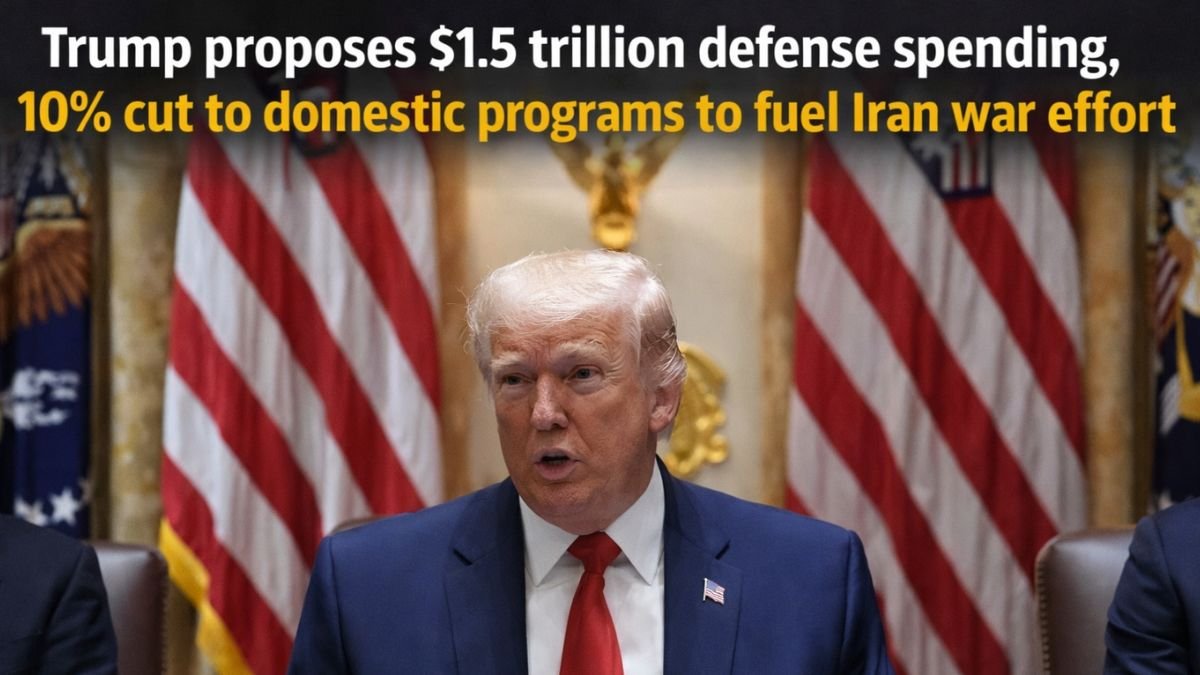
In a move that has sparked intense political debate across the United States and beyond, Donald Trump has proposed a historic federal budget centered on a massive increase in defense spending. The plan outlines a staggering $1.5 trillion allocation for military purposes while simultaneously introducing a 10% reduction in domestic programs. This proposal comes at a time of heightened geopolitical tension, particularly with the ongoing conflict involving Iran, making the stakes even higher.
The proposal is not just about numbers; it reflects a broader shift in priorities. By placing national defense at the forefront, the administration aims to reshape how government resources are allocated. However, this shift has also raised serious concerns about the potential impact on social programs that millions of Americans rely on daily.
The $1.5 Trillion Defense Spending Plan Explained
At the heart of the proposal lies a defense budget that would be the largest in modern U.S. history. The $1.5 trillion figure represents a dramatic increase compared to previous years, signaling a strong emphasis on military readiness and expansion.
This funding would cover a wide range of military priorities, including advanced weapons systems, modernization of existing forces, and expansion of naval and missile defense capabilities. Investments are also expected in emerging technologies such as artificial intelligence and cyber defense, reflecting the evolving nature of modern warfare.
The proposal also includes provisions for improving the welfare of military personnel, including pay raises and enhanced support systems. Supporters argue that such measures are essential to maintaining a strong and capable armed force in an increasingly uncertain global environment.
The Iran Factor: Driving the Military Push
A key factor behind this massive increase in defense spending is the ongoing conflict involving Iran. The United States’ involvement in this geopolitical situation has significantly influenced the administration’s priorities.
The budget proposal reflects a belief that increased military funding is necessary to sustain operations, replenish resources, and ensure long-term strategic advantage. Additional funds are expected to support munitions production, logistics, and infrastructure required for sustained military engagement.
Critics, however, argue that tying such a large budget increase to a specific conflict raises questions about long-term sustainability and the potential for escalating tensions further. The situation has also sparked global concern about the broader implications for international stability.
Domestic Spending Cuts: What’s Being Reduced
To offset the massive increase in defense spending, the proposal includes a 10% cut in non-defense discretionary spending. This translates to tens of billions of dollars being removed from various domestic programs.
These cuts are expected to impact a wide range of sectors, including education, environmental protection, healthcare research, housing assistance, and social welfare programs. Agencies such as those responsible for environmental regulation, agriculture, and public health could face significant budget reductions.
The administration has suggested that some responsibilities currently handled by the federal government could be shifted to state and local authorities. While this approach aims to reduce federal spending, it also raises concerns about whether states have the capacity to fill the gap effectively.
Economic Implications of the Proposal
Beyond its immediate impact on defense and domestic programs, the proposed budget carries significant economic implications. Analysts have pointed out that such a large increase in spending could contribute to a growing national deficit and debt.
While the administration has indicated that revenue from tariffs and economic growth could help offset some of the costs, many experts remain skeptical. The long-term financial sustainability of the plan is a major point of contention among policymakers and economists alike.
At the same time, increased defense spending could stimulate certain sectors of the economy, particularly those مرتبط with defense manufacturing and technology. This could lead to job creation and industrial growth in specific areas, though the benefits may not be evenly distributed.
Political Reactions and Divisions
The proposal has triggered strong reactions across the political spectrum. Supporters within the Republican Party have praised the focus on national security, viewing it as a necessary step to strengthen the country’s military capabilities.
On the other hand, many Democrats have strongly opposed the plan, arguing that it prioritizes military spending at the expense of essential social services. Critics have labeled the proposal as unrealistic and unlikely to pass in its current form, given the need for congressional approval.
The debate highlights deep divisions in American politics, particularly regarding how government resources should be allocated. It also underscores the challenges of balancing national security needs with domestic priorities.
Impact on Everyday Americans
For ordinary citizens, the proposed budget could have far-reaching consequences. Reductions in domestic spending may affect access to healthcare, education, housing assistance, and other critical services.
Programs that support low-income families, students, and vulnerable populations could face funding shortages, potentially leading to reduced benefits or stricter eligibility requirements.
At the same time, increased defense spending may not directly benefit most households, raising questions about the overall impact on quality of life. This contrast has become a central theme in the ongoing debate surrounding the proposal.
Strategic Goals Behind the Budget
From a strategic perspective, the budget reflects a doctrine focused on military strength as a means of ensuring national security. The administration has emphasized the importance of maintaining a strong defense posture in the face of global threats.
This includes not only addressing current conflicts but also preparing for future challenges. Investments in advanced technology, infrastructure, and personnel are intended to position the United States as a dominant military power for years to come.
However, achieving these goals requires careful planning and coordination, as well as a willingness to address the trade-offs involved in reallocating resources.
Challenges Ahead in Congress
Despite the bold vision outlined in the proposal, its path to implementation is far from certain. The U.S. Congress holds the power to approve, modify, or reject the federal budget, and lawmakers from both parties have expressed concerns about various aspects of the plan.
Negotiations are expected to be complex and potentially contentious, with debates likely focusing on the balance between defense and domestic spending. Compromises may be necessary to secure enough support for the budget to pass.
The outcome of these discussions will play a crucial role in determining the final shape of the federal budget and the direction of U.S. policy in the coming years.
Conclusion: A Defining Moment in Fiscal Policy
The proposed $1.5 trillion defense budget marks a defining moment in U.S. fiscal policy. It represents a significant shift toward prioritizing military strength, driven in part by the ongoing conflict with Iran and broader geopolitical considerations.
At the same time, the planned cuts to domestic programs have sparked widespread debate about the role of government and the importance of social support systems. As discussions continue, the proposal serves as a reminder of the कठिन choices that come with managing national resources in a complex and uncertain world.
Ultimately, the fate of this budget will depend on political negotiations, public opinion, and the evolving global landscape. What remains clear is that the decisions made in the coming months will have lasting implications for both national security and the everyday lives of Americans.
FAQs
1. What is the proposed defense budget amount?
The proposal suggests a massive $1.5 trillion for defense spending.
2. Why are domestic programs being cut?
To redirect funds toward military spending, especially related to the Iran conflict.
3. Will this budget plan be approved immediately?
No, it must go through Congress and may face changes before approval.