
For many people, paying rent is one of the largest and most unavoidable expenses in daily life. Unlike optional spending, rent is a fixed cost that must be managed every month, regardless of changes in income or financial circumstances. As the cost of living continues to rise, more individuals and families are finding it increasingly difficult to keep up with rental payments.
This is where rent assistance becomes an important support system. Designed to help ease financial pressure, rent assistance is a government-provided payment aimed at those who are already receiving certain forms of welfare. It acts as an additional layer of support, helping eligible renters maintain stable housing without falling deeper into financial stress.
Understanding how rent assistance works, who qualifies for it, and how much support you can receive is essential for anyone navigating financial challenges while renting.
What Is Rent Assistance?
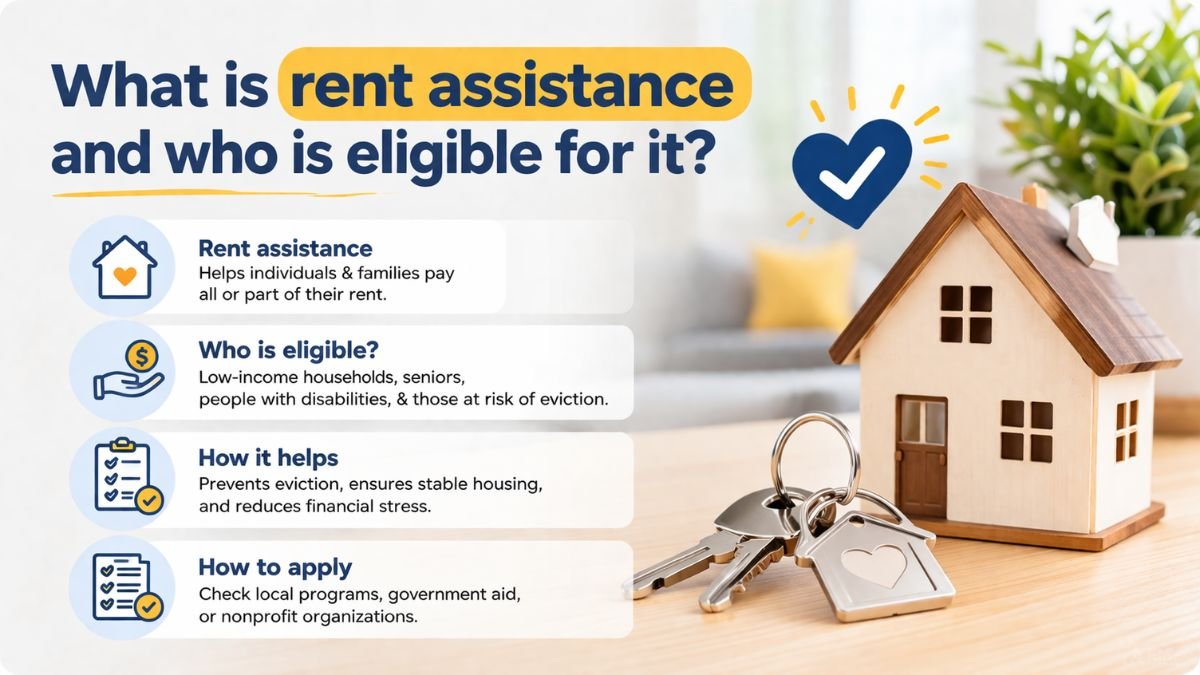
Rent assistance is a financial payment provided by the Australian Government to individuals who are renting and already receiving specific Centrelink benefits. It is not a standalone payment but rather a supplement added to existing government support. The primary goal of rent assistance is to reduce the burden of housing costs for people who may already be in a vulnerable financial position.
The amount a person receives depends largely on how much rent they pay. The higher the rent—above a certain minimum threshold—the more assistance they may be eligible for, up to a capped maximum amount. This ensures that the support is targeted and proportional to actual housing costs.
Rent assistance can apply to a variety of living situations. It is not limited to traditional rental homes or apartments. Individuals living in community housing, retirement villages, caravans, or even boats may also qualify, provided they incur eligible housing-related costs such as site or mooring fees.
Why Rent Assistance Matters
The importance of rent assistance goes beyond simply helping people pay their bills. Stable housing is a fundamental part of overall well-being. When individuals struggle to afford rent, it can lead to stress, anxiety, and even the risk of homelessness.
By providing additional financial support, rent assistance helps reduce this pressure. It allows individuals to allocate their limited income more effectively, covering other essential expenses such as food, healthcare, and utilities.
In many cases, rent assistance can make the difference between maintaining a secure home and facing housing instability. It plays a crucial role in supporting low-income households, students, job seekers, and retirees who rely on government payments to meet their basic needs.
Who Is Eligible for Rent Assistance?
Eligibility for rent assistance is closely tied to receiving certain government benefits. Individuals who are already supported through Centrelink payments may automatically be considered for rent assistance if they meet the necessary criteria.
People receiving payments such as the Age Pension, Disability Support Pension, or Carer Payment may qualify. Students receiving ABSTUDY, Austudy, or Youth Allowance may also be eligible, as well as individuals receiving JobSeeker Payment, Parenting Payment, or Family Tax Benefit. In addition, those on Farm Household Allowance or Special Benefit may also be included.
However, simply receiving one of these payments is not enough. To qualify, individuals must also be paying rent or similar housing-related costs. This could include rent for a house or apartment, fees in a retirement village, boarding or lodging expenses, or site fees for caravans or relocatable homes.
There are also special conditions that may apply depending on a person’s age, living situation, or housing arrangement. For example, young people or those living in shared accommodation may be assessed differently.
How Much Rent Assistance Can You Receive?
The amount of rent assistance a person receives depends on several factors, including their living arrangement, whether they have dependent children, and how much rent they pay. The system is designed so that for every dollar of rent paid above a certain minimum threshold, a portion is returned as assistance, up to a maximum limit.
For individuals without dependent children, the maximum payment is currently set at $219.40 per fortnight for singles. Those living in shared housing may receive a lower maximum amount. Couples are assessed together, with a combined maximum payment that reflects their shared living costs.
For families with dependent children, the support is higher. Single parents with one or two children can receive up to $257.88 per fortnight, while those with three or more children may receive up to $291.48. Couples with children are also eligible for higher payments, depending on the number of dependents.
These amounts are not fixed forever. Rent assistance rates are reviewed and adjusted twice a year, typically in March and September, to keep up with inflation and changes in living costs. This ensures that the support remains relevant and effective over time.
How Rent Assistance Is Calculated
The calculation of rent assistance is based on a simple principle: the more rent you pay above the minimum threshold, the more assistance you receive, up to a capped limit. Specifically, individuals receive a percentage of the rent paid above this threshold.
This approach ensures fairness, as it takes into account both the individual’s financial situation and their actual housing costs. Someone paying higher rent due to living in an expensive area may receive more support than someone with lower rental expenses.
However, once the maximum payment is reached, additional rent costs will not increase the assistance further. This cap is designed to balance support with budget limitations and ensure the system remains sustainable.
Who Is Not Eligible for Rent Assistance?
While rent assistance provides valuable support, not everyone who rents is eligible to receive it. Certain conditions can disqualify individuals from accessing this payment.
For example, people who own or are in the process of buying the home they live in are not eligible, as the payment is specifically designed for renters. Similarly, individuals staying in government-subsidized aged care facilities may not qualify, as their housing costs are already supported in other ways.
Those renting from state or territory housing authorities may also be excluded, depending on their specific circumstances. Additionally, situations involving partners receiving overlapping benefits may affect eligibility.
Understanding these limitations is important, as it helps individuals determine whether they should expect to receive rent assistance or explore alternative forms of support.
How to Apply for Rent Assistance
One of the most convenient aspects of rent assistance is that there is no separate application process required. When individuals apply for other Centrelink payments, their eligibility for rent assistance is automatically assessed.
If a person qualifies, they may be asked to provide proof of their rental arrangements. This could include a formal lease agreement or, in some cases, a rent certificate that must be completed and verified.
For those already receiving rent assistance, it is important to keep their information up to date. Changes such as moving to a new home, changes in rent amount, or shifts in family circumstances must be reported. This ensures that the payment remains accurate and reflects the individual’s current situation.
Changes That Can Affect Your Payment
Rent assistance is not a static payment. It can change based on various factors in a person’s life. If your rent increases or decreases, your assistance may be adjusted accordingly. Similarly, moving to a different property or changing living arrangements can impact the amount you receive.
Income changes can also play a role. If your earnings increase or decrease, it may affect your overall eligibility for Centrelink payments, which in turn can influence your rent assistance.
Family changes, such as separation or having children, can also alter the level of support provided. Regular reviews by Centrelink help ensure that payments remain fair and aligned with each individual’s circumstances.
Rent Assistance as Part of a Bigger Financial Strategy
While rent assistance can provide meaningful support, it is most effective when combined with good financial management. Budgeting, tracking expenses, and exploring additional support options can help individuals make the most of the assistance they receive.
For those looking to reduce long-term housing costs, government programs aimed at helping people buy their own homes may also be worth considering. Initiatives such as low-deposit schemes can provide pathways out of the rental market for eligible individuals.
In the meantime, rent assistance serves as a valuable tool for maintaining stability and reducing financial strain.
Conclusion: A Support System for Renters in Need
Rent assistance plays a vital role in supporting individuals and families who are struggling to keep up with rising housing costs. By providing additional financial help to those already receiving government benefits, it helps ensure that more people can maintain secure and stable housing.
Understanding what rent assistance is, who qualifies for it, and how it is calculated can empower individuals to take full advantage of the support available to them. While it may not cover all rental expenses, it can significantly reduce the burden and provide much-needed relief.
In a world where financial pressures are constantly evolving, programs like rent assistance offer a sense of security and support. With the right information and awareness, eligible renters can use this assistance to create a more stable and manageable living situation for themselves and their families.
FAQs
What is rent assistance?
Rent assistance is financial support provided by governments to help individuals cover housing or rental costs.
Who is eligible for rent assistance?
Eligibility usually depends on income level, residency status, and whether you rent privately or through housing programs.
How can I apply for rent assistance?
You can apply through government portals or local housing authorities by submitting required documents and income details.